
Conference theme
The pace of historical time is distinguished from the even rhythm of natural time by being marked by accelerations, slowdowns, stagnations, even reversals, chiefly because it is shaped by the realization or frustration of human intentions aiming to bring about imagined or desired future conditions. More than merely “seeing” the future, we want to master it, while being aware that our means to do so are finite – because of our fallibility,
because God’s ways are inscrutable, because fortune is volatile, or because our human and natural environment is much too complex to be fully intelligible, to name but a few oft-cited reasons. As a result, confidence and conceit alternate with doubt, even despair in future-thinking. These stances are reflected in plans, projects, scenarios, even narratives about hoped-for, expected or abhorred futures.
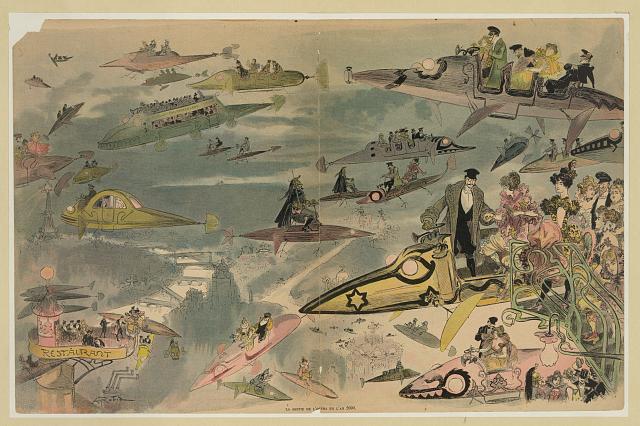
Humans have never stopped engaging in devising and designing futures, most of which inevitably turned out to be speculative. “What if” questions used to be dismissed by professional historians as ahistorical or unscientific, but they are such only if history wie es eigentlich gewesen is acknowledged as the only possible history. Counter-factual history has rendered useful services by challenging the myths of historical necessity and inevitability. In addition, insisting on “facts” in the strict sense is now considered to risk undermining the requirement of understanding historical agents in their own context – contexts which include visions of the future that remained unfulfilled but still imbued their mental world, belonged to their space of experience, and guided their lives. This conference addresses the intellectual history of paths not taken, but conceived – desired, envisioned or feared – as feasible by past actors who did not have our benefit of hindsight. What were the intellectual and discursive frameworks adopted to express such unrealized – wanton, futile, aborted – scenarios of the future? What experiential grounds supplied them with credibility and plausibility? What political, social, ideological, intellectual and other agendas were they mobilized to promote? How were they represented in the visual and other arts?
These and similar relevant questions look highly topical for intellectual historians in the 2020s, when all anxiety regarding the future of our planet as we know it and our kind seems well warranted. We invite proposals that address them across all historical periods and world regions. Thus, possible – and possibly intersecting – themes include (but are not limited to):
Keynote speakers
- Franz Leander FillaferAustrian Academy of Sciences
- Michelle PfefferUniversity of Oxford
- Pierre SingaravélouUniversité Paris I Panthéon-Sorbonne
- and Quentin DeluermozUnivesrity of Cambridge
Submission guidelines
Please send proposals for individual papers (max. 300 words) or thematic panels (max. 500 words, with 3–4 paper abstracts) to isih2027@ceu.edu not later than 15 January 2027. Please include a short CV or biographical note (max. 1 page) for each prospective speaker.
Conference fee (indicative):
100 GBP (reduced fee may be available for graduate student participants).
Timeline
Bursaries
The ISIH is pleased to offer a limited number of bursaries for travel (up to £500 from Europe and the Middle East, up to £800 from North America, and up to £1,000 from the rest of the world) as well as waived conference fees for PhD candidates and early career scholars (within 3 years of PhD completion). Please include a brief “statement of need” explaining limited access to institutional or other funding when submitting your proposal. Recipients shall be notified upon or shortly after the acceptance of proposals.
Publication opportunity
Participants may be invited to submit manuscripts for individual articles or thematic blocks based on their contributions to the ISIH’s peer-reviewed journal Intellectual History Review.